The Word of God Holistic Wellness Institute
"Helping The World DISCOVER THE WAY of LOVE!"
Enhancing Yttria Ceramics via Grain Size Reduction
Aluminum nitride (AlN) has attracted considerable interest as a ceramic substrate for electronic devices due to its exceptionally high thermal conductivity and excellent electrical resistivity. However, its use is often constrained by inadequate mechanical properties. In this study, pressure-assisted two-step sintering was utilized to fabricate AlN-Y2O3 ceramics with the goal of enhancing mechanical performance through grain refinement. Applying pressure-assisted heating at 1680 °C followed by microstructural stabilization at lower temperatures significantly reduced grain size from 2.21 µm to 1.08 µm, which improved flexural strength, Vickers hardness, and fracture toughness. Notably, sintering at 1650 °C (T2) yielded an optimal balance of mechanical and thermal properties, achieving a flexural strength of 417 MPa and thermal conductivity of 144 W/mK. These results offer important guidance for advancing AlN-Y2O3 ceramics in electronic device applications, without the need for additional reinforcement additives.

Recent advancements in power semiconductor technology have increased the need for alternative ceramic substrates capable of efficient heat dissipation in electronic devices. Traditional aluminum oxide (Al2O3) substrates fall short due to their limited thermal conductivity (20–30 W/mK). Silicon nitride (Si3N4) offers promising mechanical strength and improved thermal dissipation but presents challenges in synthesis and achieving full density. In this context, aluminum nitride (AlN) has garnered significant interest as a versatile ceramic material. Boasting exceptional thermal conductivity, excellent electrical resistivity, a low dielectric constant, and a thermal expansion coefficient closely matching silicon, AlN is well-suited for applications in electronics, optoelectronics, and thermal management. Its outstanding heat dissipation and electrical insulation properties make it an optimal choice for ceramic substrates designed to manage heat effectively.
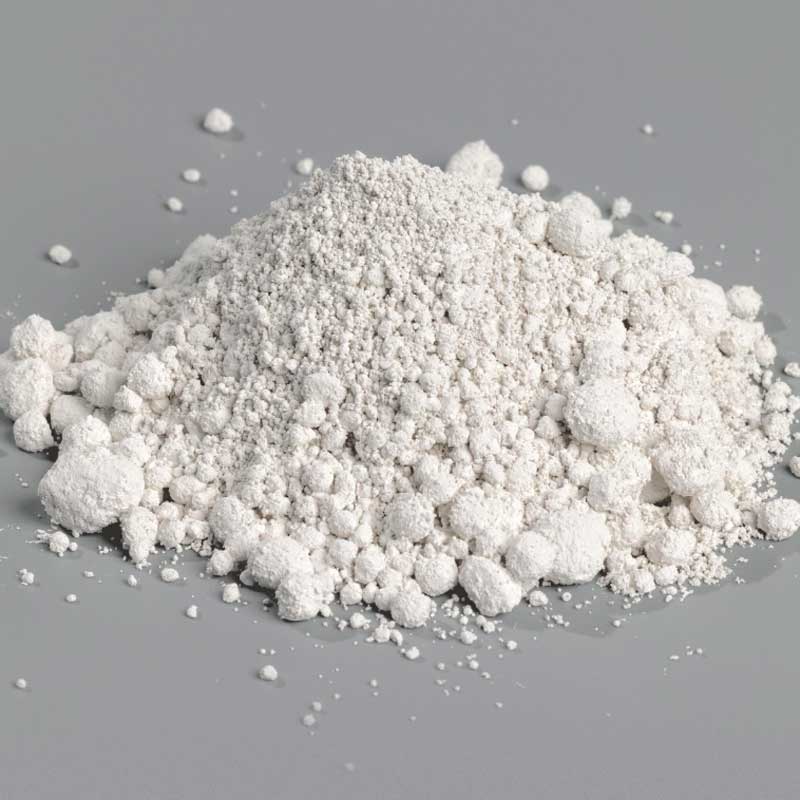
Aluminum nitride (AlN) poses challenges for successful sintering due to its strongly covalent wurtzite crystal structure and low self-diffusion coefficients, necessitating very high sintering temperatures above 1900 °C. To address this, various sintering additives have been explored to lower the sintering temperature, with Y2O3 recognized as one of the most effective. Y2O3 reacts with the Al2O3 layer on AlN particle surfaces, forming aluminate phases that promote densification via liquid-phase sintering. Additionally, Y2O3 serves as an oxygen and impurity scavenger, further enhancing AlN’s thermal conductivity. Alongside this, multiple sintering methods such as pressureless sintering, hot pressing, hot isostatic pressing, spark plasma sintering, and high-frequency induction heating have been applied to obtain fully dense AlN. While these techniques achieve desired densification and properties, they often result in significant grain growth. The development of large grains can negatively affect mechanical properties like flexural strength and fracture toughness, limiting the practical use of aluminum nitrideceramics.

The refinement of microstructures in ceramic materials has been a subject of significant investigation driven by the desire to improve their mechanical properties for advanced applications. In particular, two-step sintering (TSS) offers a promising solution to achieve high-density bodies with smaller grain sizes . In TSS approach, the ceramic green bodies undergo two distinctive processes. Initially, they are heated to a higher temperature (T1) to attain critical density, followed by rapid cooling to a lower temperature (T2). Subsequently, the samples are maintained at this temperature for an extended duration to facilitate full densification, while controlling grain growth . TSS has demonstrated its effectiveness in multiple ceramic systems, including yttrium oxide , barium titanate , silicon carbide , titanium dioxide , and aluminum oxide . Through TSS, these ceramics exhibit enhanced mechanical properties attributed to the refined microstructures.

Numerous efforts have been made to enhance the mechanical properties of AlN ceramics, often by incorporating substantial amounts of reinforcement additives like Si3N4, graphene, SiC, BN, MoSi2, and TiB2. However, this strategy typically compromises thermal conductivity, reducing thermal performance. In contrast, this study employed a two-step sintering (TSS) protocol to produce AlN-Y2O3 ceramics with improved mechanical properties while avoiding additional reinforcement additives. A thorough evaluation of the microstructural, mechanical, and thermal characteristics revealed that the TSS method produced finer microstructures, significantly enhancing flexural strength, Vickers hardness, and fracture toughness. These results demonstrate that TSS is a promising approach for boosting the mechanical performance of AlN-Y2O3 ceramics without relying heavily on reinforcement additives.
Views: 8
-
Comment by OpheliaWarnerb on Wednesday
Comment
About
Praise Jesus Christ!

May God Bless & Prosper You!
"Holistic Wellness and Health"
Health, Education, and Social Service: Crisis Intervention/Life Empowerment (323) 73-LIGHT
Appointments (323) 402-0422
Loving to Learn Online Store
"Over 300 Low Priced, Quality Products"
Your Holistic Wellness: Spirit, Body and Mind
TIME IS RUNNING OUT!
© 2025 Created by Drs Joshua and Sherilyn Smith.
Powered by


You need to be a member of The Word of God Holistic Wellness Institute to add comments!
Join The Word of God Holistic Wellness Institute