The Word of God Holistic Wellness Institute
"Helping The World DISCOVER THE WAY of LOVE!"
Top iGaming Ad Formats Explained: Why Native Ads Win
There’s a pattern most performance marketers in iGaming eventually recognize: the more aggressively an ad format tries to force attention, the faster user resistance builds. This is especially visible in regulated and semi-regulated markets where skepticism is already high. Against that backdrop, iGaming native ads have steadily outperformed louder formats—not because they shout better, but because they blend better.
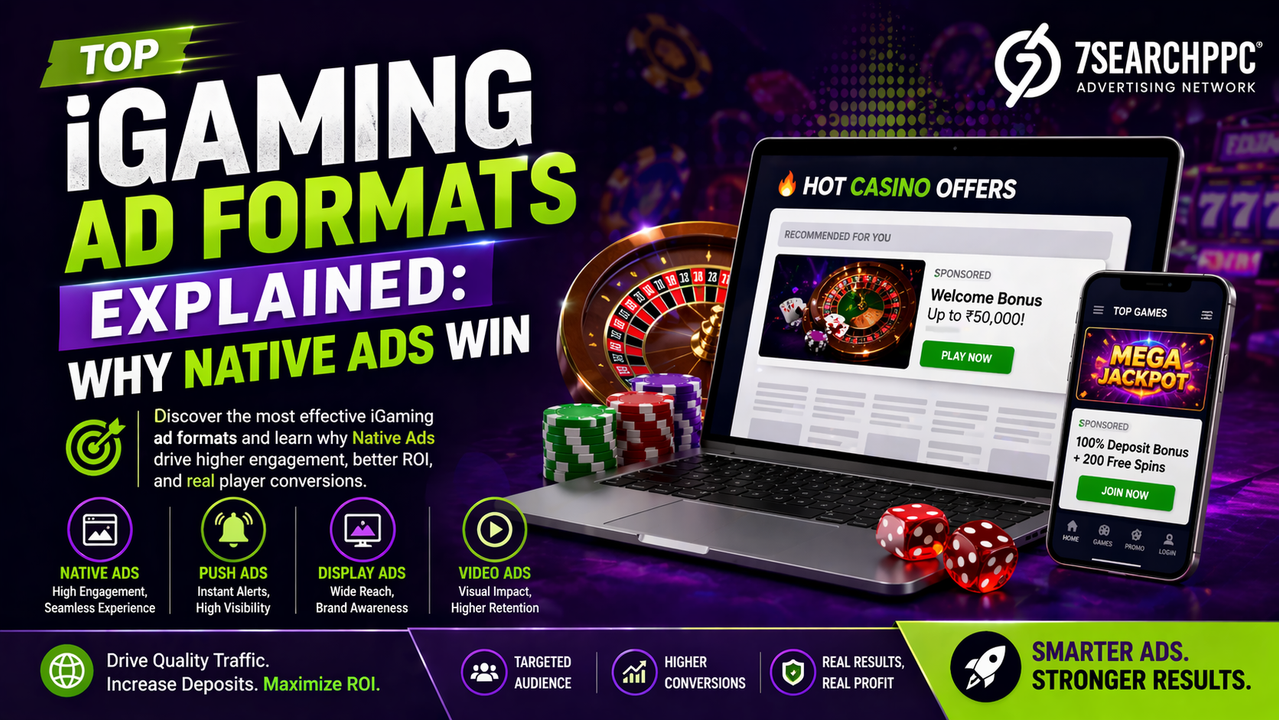
The real question isn’t whether native ads work. It’s why they consistently deliver stronger downstream metrics—registrations, first deposits, and retention—compared to push, display, or pop traffic. For advertisers managing CAC pressure and traffic quality volatility, understanding this shift is critical.
Why Most iGaming Ad Formats Plateau at Scale
At small budgets, nearly every format appears effective. Push notifications generate clicks. Display banners create impressions. Pop traffic delivers volume. But once campaigns move beyond testing into scaling, structural weaknesses begin to surface.
Push ads, for example, often show strong initial CTR but suffer from rapid fatigue. Users opt in casually but disengage just as quickly. Display banners face banner blindness—users instinctively ignore anything that looks like an ad. Pop traffic may drive volume, but conversion intent is usually low, leading to poor deposit quality.
In most campaigns, advertisers notice a widening gap between top-of-funnel metrics (clicks, impressions) and bottom-of-funnel outcomes (FTDs, retention). This disconnect increases acquisition costs without improving player value.
The underlying issue is intent mismatch. These formats interrupt rather than integrate. As a result:
- Click quality declines as scale increases
- Conversion rates drop after initial optimization
- Retention suffers due to low initial intent
This is precisely where native formats start to outperform—not by increasing volume, but by improving alignment between user context and message delivery.
Want Better Results from Your iGaming Ads?
Explore native advertising strategies that actually convert.
Get Started TodayWhat Makes iGaming Native Ads Structurally Different
Unlike interruptive formats, native ads for casino environments are embedded within content ecosystems. They appear as part of editorial feeds, recommendation widgets, or in-article placements. This changes not just visibility, but perception.
Users don’t encounter native ads as disruptions. They encounter them as options. That subtle shift dramatically alters engagement behavior.
From a performance standpoint, this leads to:
- Higher dwell time before click
- Lower bounce rates post-click
- More deliberate user intent entering the funnel
In casino native advertising, creatives often resemble articles, guides, or comparisons rather than promotional banners. This format naturally filters out low-intent users while attracting those already curious about betting or gaming experiences.
The impact is not always immediate CTR spikes—but stronger conversion efficiency and improved deposit quality over time.
User Behavior: Why Native Aligns Better With Gambling Intent
User psychology plays a central role in why betting native ads outperform. Gambling is not an impulse-only category; it often involves consideration, curiosity, and perceived risk evaluation.
When users encounter aggressive formats, their instinct is defensive. But when they see a native placement—especially within relevant content—they are more likely to engage cognitively rather than reactively.
Across Indian traffic environments, advertisers often notice that:
- Users spend more time evaluating offers presented via native content
- Click-through behavior is slower but more intentional
- Registration-to-deposit ratios improve significantly
This is particularly important in sportsbook native advertising, where users may be researching teams, odds, or strategies. Native placements inserted into this journey feel contextual rather than promotional.
The result is not just better conversions—but more stable performance over time, especially under scaling pressure.
Comparing Native vs Push vs Display: A Funnel-Level Perspective
Looking at ad formats through a funnel lens reveals why native ads win in iGaming.
Push traffic typically dominates the awareness stage. It’s fast, scalable, and cost-efficient initially. However, it struggles in mid-funnel engagement and often underperforms in deposit conversion.
Display advertising operates similarly but suffers from lower engagement due to banner fatigue. It works best for retargeting but rarely excels in cold acquisition.
Native ads, on the other hand, compress the funnel. They combine awareness and consideration into a single interaction.
- Awareness: User encounters content-like placement
- Consideration: User engages with informative or contextual creative
- Conversion: User enters funnel with higher intent
This efficiency reduces friction between stages, which directly impacts CAC and ROI. It also explains why many advertisers integrate native as a core acquisition channel rather than a supplementary one.
For deeper breakdowns of how formats perform across campaigns, reviewing iGaming advertising campaign examples can provide additional context.
Traffic Quality vs Volume: The Native Advantage
One of the most misunderstood dynamics in iGaming acquisition is the trade-off between traffic volume and traffic quality. Many advertisers prioritize scale early, only to face declining ROI later.
Native ad networks for iGaming typically deliver lower raw volume compared to pop or push sources. However, the quality differential is significant.
In most campaigns:
- Native traffic shows higher registration completion rates
- Deposit rates per user are stronger
- Retention curves are more stable over 7–30 days
This makes native particularly effective for advertisers focused on LTV rather than short-term conversions.
When evaluating best native ads for gambling, the real metric isn’t CTR—it’s downstream value. High CTR with low deposit quality is ultimately more expensive than moderate CTR with high-value users.
Creative Strategy: Why Native Ads Require a Different Approach
One reason many advertisers fail with online casino native ads traffic is treating them like display ads. Native requires a fundamentally different creative philosophy.
Instead of direct promotion, effective native creatives focus on:
- Story-driven hooks
- Curiosity-based headlines
- Informational framing (guides, comparisons, insights)
For example, “Best Casino Bonuses Today” may underperform compared to “What Most New Players Miss Before Claiming Bonuses.” The latter invites exploration rather than pushing an offer.
In native advertising for betting apps, this approach reduces resistance and increases engagement depth. It also improves compliance positioning, as content appears more informational than promotional.
Compliance Reality: Why Native Is Safer in Regulated Markets
Regulatory pressure in iGaming is increasing globally, including in India. Ad formats that appear overly aggressive or misleading face higher rejection rates and account risks.
Native ads offer a structural advantage here. Because they resemble editorial content, they are easier to align with compliance guidelines—provided creatives are responsibly designed.
Advertisers using iGaming native ad platforms often experience:
- Lower ad rejection rates
- Reduced account volatility
- Greater flexibility in messaging
However, this does not eliminate risk. Misleading claims or exaggerated promises can still trigger moderation issues. The key is maintaining informational integrity while optimizing for performance.
Scaling Native Campaigns Without Losing Efficiency
Scaling native campaigns requires a different mindset compared to other formats. Volume expansion is slower, but sustainability is higher.
In gambling native ads, scaling typically involves:
- Expanding GEO segments (Tier 2 and Tier 3 markets)
- Diversifying creatives rather than increasing frequency
- Testing multiple content angles instead of repeating winners
Understanding advertising Tier: Tier 1, Tier 2 & Tier 3 traffic is critical here. Native performs differently across these tiers, with emerging markets often showing stronger engagement due to lower saturation.
At scale, advertisers often notice diminishing returns when relying on a single creative or angle. Continuous iteration becomes essential to maintain performance.
Choosing the Right Environment for Native Success
Not all native environments are equal. The context in which ads appear significantly impacts performance.
When evaluating the best advertisement platform for iGaming, advertisers should consider:
- Content relevance to gambling or sports
- User engagement levels on the publisher site
- Traffic authenticity and fraud controls
Native placements within relevant editorial ecosystems—sports news, gaming blogs, betting guides—consistently outperform generic placements.
The closer the content environment aligns with user intent, the higher the probability of meaningful engagement.
Where Native Ads Fit in a Modern iGaming Stack
Native ads are not a replacement for other formats—they are a stabilizer. In most mature acquisition stacks, they complement push, display, and retargeting channels.
A typical structure might look like:
- Push ads for rapid testing and awareness
- Display for retargeting and brand recall
- Native ads for high-intent acquisition and scaling stability
This layered approach allows advertisers to balance volume and quality while managing risk across channels.
Final Strategic Takeaway
Native ads don’t “win” because they generate the most clicks. They win because they align better with how users actually make decisions in iGaming. At scale, that alignment translates into more efficient acquisition, stronger deposit behavior, and more resilient campaigns.
Advertisers who prioritize volume over intent often cycle through formats without solving their core problem. Those who understand why native works—and adapt their strategy accordingly—tend to build acquisition systems that last longer and perform more predictably.
Frequently Asked Questions (FAQs)
Do native ads work better for new or established iGaming brands?
Ans. They work for both, but the impact differs. New brands benefit from trust-building and reduced resistance, while established brands use native to improve conversion efficiency and retention quality.
Are native ads more expensive than push or display?
Ans. Cost per click can be higher, but cost per acquisition is often lower due to better conversion rates and user quality.
How long does it take to optimize native campaigns?
Ans. Optimization cycles are typically longer. Unlike push ads, native requires creative testing, angle refinement, and audience alignment before reaching peak performance.
Can native ads scale as aggressively as other formats?
Ans. Scaling is more controlled. While volume growth is slower, performance remains more stable, making it suitable for long-term acquisition strategies.
What’s the biggest mistake advertisers make with native ads?
Ans. Treating them like display ads. Native requires content-driven thinking, not direct-response banner strategies.
Views: 19
Comment
About
Welcome to
The Word of God Holistic Wellness Institute
Praise Jesus Christ!

May God Bless & Prosper You!
"Holistic Wellness and Health"
Health, Education, and Social Service: Crisis Intervention/Life Empowerment (323) 73-LIGHT
Appointments (323) 402-0422
Loving to Learn Online Store
"Over 300 Low Priced, Quality Products"
Your Holistic Wellness: Spirit, Body and Mind
TIME IS RUNNING OUT!
© 2026 Created by Drs Joshua and Sherilyn Smith.
Powered by


You need to be a member of The Word of God Holistic Wellness Institute to add comments!
Join The Word of God Holistic Wellness Institute